What You Need to Know About Crowd Control Licensing in NSW
Featured Companies

Coastal Protective Services
Professional 24/7 security services on the Central Coast and Newcastle. Mobile patrols, security guards, event security, crowd control & alarm monitoring. Free consultation.
Visit Website- 1. What You Need to Know About Crowd Control Licensing in NSW
- 2. Why Crowd Control Is a Regulated Activity in NSW
- 3. What Is a Crowd Controller?
- 4. Current NSW Licensing Requirements for Crowd Control
- 5. Why the Licence Class Matters
- 6. Why Licensing Compliance Matters for Your Venue or Event
- 7. Legal Liability
- 8. Insurance Risk
- 9. Reputational Risk
- 10. Common Crowd Control Duties at Events
- 11. Crowd Control at Licensed Venues
- 12. Crowd Control at Public Events
- 13. Crowd Control at Corporate and Private Events
- 14. Choosing a Compliant Crowd Control Provider
- 15. What Event Organisers Should Check Before the Event
- 16. How Many Crowd Controllers Does an Event Need?
- 17. Why Crowd Control Training Matters
- 18. Incident Reporting and Documentation
- 19. Event Security and Duty of Care
- 20. Security for Central Coast Events
- 21. Security Guard Hire for Events and Venues
- 22. Warning Signs of a Poor Security Provider
- 23. Final Checklist Before Booking Crowd Control
- 24. Choose Licensed Event Security on the Central Coast
- 25. Frequently Asked Questions
- 26. What licence does a crowd controller need in NSW?
- 27. Is Class 1C still used for crowd control in NSW?
- 28. Do event organisers need to check security licences?
- 29. Can a general security guard do crowd control?
- 30. Why is crowd control licensing important?
- 31. Does Coastal Protection Services provide event security?
Not all security guards are licensed for crowd control. Here's what the law requires and why it matters for your venue.
Event security is not just about placing guards at a gate. It is about managing risk, protecting attendees and helping organisers meet their duty of care.
For venues and event organisers in New South Wales, crowd control must be handled correctly. Security staff need the right licence, training and experience for the work they perform.
This is especially important for events on the Central Coast. Festivals, licensed venues, sporting events, community markets and corporate functions all involve people, movement and risk.
Using the wrong security staff can create serious problems. It can expose your venue or event to legal issues, insurance problems and reputational damage.
Coastal Protection Services provides professional security services for businesses, venues and events across the Central Coast.
What You Need to Know About Crowd Control Licensing in NSW
Crowd control is a regulated security activity in NSW. It should only be carried out by properly licensed security personnel.
This guide explains what crowd control means, why licensing matters and what event organisers should check before hiring guards.
It also explains why compliance should be part of every event security plan.
Why Crowd Control Is a Regulated Activity in NSW
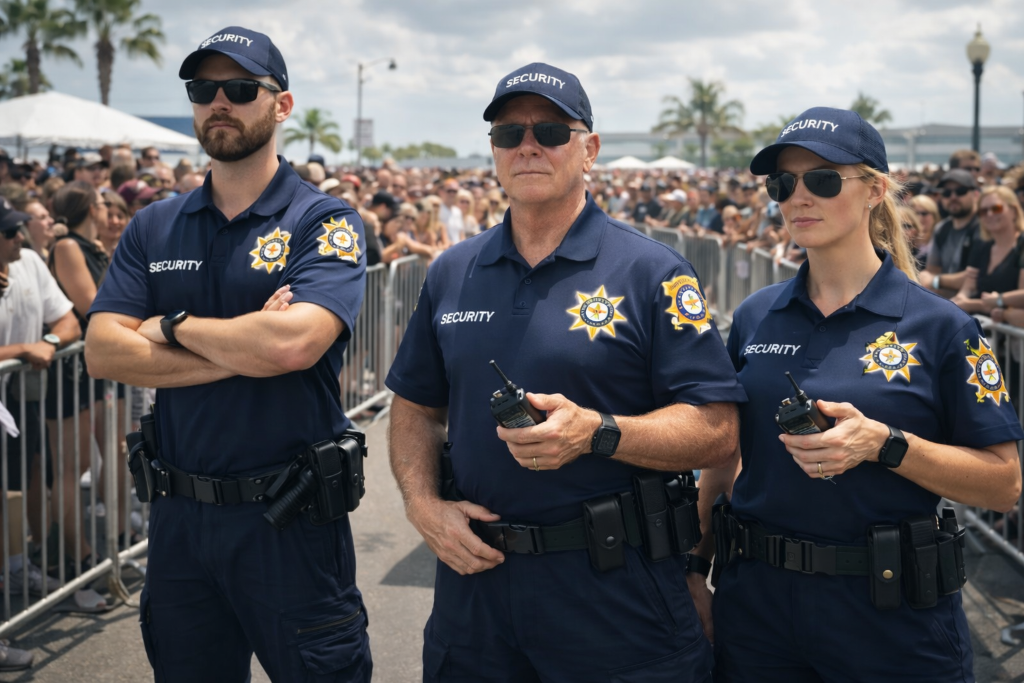
Crowd control involves more than watching a crowd. It can involve managing behaviour, screening people, refusing entry and removing people from a venue or event.
These duties can affect public safety. They can also involve conflict, intoxicated patrons and emergency situations.
That is why crowd control is regulated under NSW security industry laws.
Event organisers and venue operators should not assume that every guard is suitable for every role. The guard must be licensed for the work being performed.
Professional security guard hire helps ensure your event has trained staff who understand crowd management, access control and incident response.
What Is a Crowd Controller?
A crowd controller is a licensed security officer who helps manage people at a relevant place. This may include licensed venues, public events, private functions, retail premises or public places.
The role often involves maintaining order and helping people move safely through a venue or event site.
Crowd control duties may include:
- Screening guests on entry
- Checking tickets, passes or wristbands
- Checking identification where required
- Monitoring queues and entry points
- Managing patron behaviour
- Supporting responsible service of alcohol procedures
- De-escalating conflict before it becomes physical
- Removing patrons when required
- Controlling restricted areas
- Communicating with event staff and emergency services
This work requires good judgement. It also requires calm communication and the ability to act quickly when needed.
Current NSW Licensing Requirements for Crowd Control
In NSW, crowd control work is now generally covered by the Class 1A Security Officer licence.
This is important because older information may still refer to a Class 1C Crowd Controller licence. That wording is outdated.
The former 1A Unarmed Guard and 1C Crowd Controller subclasses were merged into the renamed Class 1A Security Officer subclass from 1 June 2023.
Today, Class 1A authorises a licensed security officer to patrol, protect or guard property while unarmed. It also authorises them to act as a crowd controller.
Class 1C now refers to Cash-in-Transit Guard work. It should not be confused with crowd control.
Before engaging event security, organisers should confirm that assigned guards hold the correct current NSW security licence for the duties required.
Why the Licence Class Matters
Licence classes matter because different security activities involve different risks.
A guard checking a warehouse after hours is performing a different function from a guard managing intoxicated patrons at a busy event.
Crowd control requires people skills, conflict management and situational awareness. It also requires clear knowledge of what guards can and cannot do.
Using guards who are not properly licensed or trained can create risk for everyone involved.
Why Licensing Compliance Matters for Your Venue or Event
Licensing compliance protects attendees, staff, organisers and the security provider.
It also shows that your event is being managed professionally.
Legal Liability
Using unlicensed or unsuitable staff can expose an event organiser to serious legal risk.
If an incident occurs, questions may be asked about who was engaged, what they were licensed to do and whether the organiser took reasonable steps to manage risk.
This is why event organisers should request licence details before the event date.
Insurance Risk
Insurance providers may review security arrangements after an incident.
If guards were not properly licensed, trained or briefed, this may create problems for claims or liability discussions.
Event organisers should keep clear records of security arrangements, guard numbers, licences and incident reports.
Reputational Risk
Poor security can damage an event brand quickly.
A poorly handled incident can spread through social media, online reviews and local news. This can affect future ticket sales, venue relationships and sponsor confidence.
Professional security reduces this risk by helping incidents stay controlled and properly documented.
Common Crowd Control Duties at Events
Crowd controllers support many parts of an event. Their role should be planned before attendees arrive.
Common duties include:
- Monitoring entry gates
- Managing queues
- Checking tickets or wristbands
- Monitoring crowd behaviour
- Controlling backstage or staff-only areas
- Assisting with lost children or vulnerable attendees
- Responding to aggressive behaviour
- Supporting first aid teams
- Assisting with emergency evacuation
- Writing incident reports after security events
At larger events, crowd controllers may be positioned across several zones. This can include entry points, bars, stages, car parks and restricted areas.
Crowd Control at Licensed Venues
Licensed venues often have higher crowd control risks. Alcohol can increase the chance of conflict, injury or poor behaviour.
Security guards may need to help venue staff monitor intoxication, manage refusals of entry and respond to aggressive patrons.
They may also need to manage lines outside the venue and reduce disruption to nearby businesses or residents.
For licensed premises, clear communication between management, bar staff and security is essential.
Crowd Control at Public Events
Public events can involve unpredictable crowd behaviour. Attendees may arrive at the same time, gather near stages or move quickly during weather changes.
Security planning should consider:
- Expected attendance numbers
- Entry and exit capacity
- Emergency access routes
- Stage and performer areas
- First aid locations
- Toilets and amenities
- Food and drink areas
- Parking and traffic movement
Crowd controllers help identify issues early. This gives organisers time to act before problems become serious.
Crowd Control at Corporate and Private Events
Corporate functions and private events may still need licensed security.
This is especially true when alcohol is served, VIP guests attend or access needs to be restricted.
Security guards can manage guest lists, check invitations and monitor entry points. They can also help protect staff, suppliers and event equipment.
Professional security creates a safer and more polished experience for guests.
Choosing a Compliant Crowd Control Provider
Not all security providers offer the same level of service. Event organisers should choose a provider that understands licensing, event planning and crowd risk.
Before booking security, ask clear questions.
- Do your guards hold current NSW security licences?
- Are the assigned guards authorised for crowd control duties?
- Can you provide licence details before the event?
- Do your guards have experience with similar events?
- Do you provide incident reports?
- Do you have public liability insurance?
- Can you provide a certificate of currency?
- Will guards be briefed before the event starts?
- Who is the site supervisor or main security contact?
A professional provider should be able to answer these questions clearly.
If a provider avoids licensing questions, that should be treated as a warning sign.
What Event Organisers Should Check Before the Event
Security should be planned before the event day. Last-minute bookings can create gaps in coverage.
Before the event, organisers should confirm:
- The number of guards required
- The licence status of assigned guards
- Guard arrival and finish times
- Uniform requirements
- Entry and exit procedures
- Emergency evacuation procedures
- Radio or phone communication channels
- Incident reporting requirements
- First aid and emergency service contacts
- Restricted areas and access rules
This preparation helps security staff work effectively from the moment they arrive.
How Many Crowd Controllers Does an Event Need?
The number of guards required depends on the event size, venue layout and risk level.
A small private function may only need one or two guards. A large public event may need a full team across several locations.
Key factors include:
- Expected attendance
- Venue capacity
- Number of entry points
- Number of exits
- Whether alcohol is served
- Event duration
- Age and profile of attendees
- History of incidents at similar events
- Whether VIPs or performers are attending
- Car park and external area risks
A security provider can help assess these factors and recommend a suitable guard plan.
Why Crowd Control Training Matters
A licence is important, but training and experience also matter.
Crowd control staff need to remain calm under pressure. They must communicate clearly and avoid escalating conflict.
Good crowd controllers understand how to:
- Read crowd behaviour
- Identify early signs of conflict
- Use calm verbal communication
- Manage intoxicated patrons
- Protect vulnerable people
- Work with event staff
- Record incidents properly
- Escalate serious matters quickly
This is why experience should be considered alongside licensing.
Incident Reporting and Documentation
Clear reporting is an important part of event security.
If an incident occurs, the organiser should have a record of what happened, who was involved and what action was taken.
Incident reports may include:
- Time and location of the incident
- Names or descriptions of people involved
- Actions taken by security
- Whether police or emergency services were contacted
- Whether first aid was required
- Witness details
- Photos or CCTV references, where available
Good documentation supports insurance, compliance and future event planning.
Event Security and Duty of Care
Event organisers have a responsibility to plan for foreseeable risks.
This includes crowd movement, access control, emergencies and security incidents.
Hiring licensed security guards is one way to support that duty of care. It shows that the organiser has taken reasonable steps to manage safety.
For higher-risk events, security should be part of a broader safety plan. This may include first aid, traffic control, emergency management and venue procedures.
Security for Central Coast Events
The Central Coast hosts many types of events. These include markets, festivals, private functions, venue events, sporting events and business functions.
Each event has different crowd control needs.
Some events need entry screening. Others need roving guards, car park checks or restricted area control.
For larger events, guards may need to work alongside police, first aid teams, traffic controllers and venue managers.
Coastal Protection Services supports Central Coast event organisers with professional security planning and guard services.
Security Guard Hire for Events and Venues
When you hire guards for an event, you need more than a uniformed presence. You need reliable people who understand security, safety and customer service.
Event security guards should be approachable but firm. They should help attendees feel safe while still enforcing event rules.
Coastal Protection Services provides security guard hire for events, venues, businesses and commercial sites across the Central Coast.
Security guards can assist with:
- Event entry control
- Queue management
- Patron screening
- Restricted area protection
- Asset protection
- Conflict de-escalation
- Incident response
- Emergency support
- Staff safety
- End-of-event crowd dispersal
Warning Signs of a Poor Security Provider
Choosing the wrong provider can create serious problems.
Be cautious if a security provider:
- Will not provide licence details
- Cannot explain guard roles clearly
- Does not ask about your event layout
- Does not request a risk briefing
- Cannot provide insurance information
- Offers pricing that seems unusually low
- Has limited event security experience
- Does not provide written confirmation of services
A professional provider should help you plan. They should not simply send guards without understanding the event.
Final Checklist Before Booking Crowd Control
Before confirming your provider, use this quick checklist.
- Confirm guards hold current NSW security licences
- Check that guards are authorised for the required duties
- Confirm insurance coverage
- Provide the event site map
- Confirm the number of guards required
- Set arrival and finish times
- Confirm communication methods
- Brief guards on emergency procedures
- Identify restricted areas
- Request incident reporting after the event
This helps protect your event, your attendees and your organisation.
Choose Licensed Event Security on the Central Coast
Crowd control licensing is not a box-ticking exercise. It is a key part of responsible event management.
Licensed and experienced guards help reduce risk, manage behaviour and support a safer event environment.
If you are planning an event, venue function or public gathering, speak with a professional security provider early.
Coastal Protection Services provides professional event security and security guard hire across the Central Coast.
Contact Coastal Protection Services to discuss your event security needs and arrange a tailored quote.
Frequently Asked Questions
What licence does a crowd controller need in NSW?
In NSW, crowd control work is generally covered by the Class 1A Security Officer licence. Older references to a Class 1C Crowd Controller licence are outdated.
Is Class 1C still used for crowd control in NSW?
No. Class 1C now refers to Cash-in-Transit Guard work. Crowd control is covered under the Class 1A Security Officer subclass.
Do event organisers need to check security licences?
Yes. Event organisers should confirm that security staff hold the correct current NSW security licence for the duties being performed.
Can a general security guard do crowd control?
A guard must be licensed for the relevant work. In NSW, the Class 1A Security Officer licence authorises crowd control duties.
Why is crowd control licensing important?
Licensing helps protect attendees, staff, venues and organisers. It also helps reduce legal, insurance and reputational risk.
Does Coastal Protection Services provide event security?
Yes. Coastal Protection Services provides event security and security guard hire across the Central Coast.

Written by
Susan Blenman
SEO Analyst
Susan Blenman has worked in the security industry since 1993, sharing trusted insights and real-world expertise on security systems, technology, and protection strategies.
Stay informed
Get the latest security insights, guides, and company spotlights delivered to your inbox.
Related Articles
Sponsored

Ajax Alarm Systems: Wireless, App-Controlled & Pet-Friendly Security
Smart, Stylish Security for Homes & Small Business Protect what matters with the Ajax wireless alarm ecosystem—fast to install, easy to use, and ready for smartphone control. Choose pre-built kits or build your own with motion, door/window, glass break, sirens, keypads and more.

Protect Your Property After Hours
Keep your business, site or facility secure with professional mobile patrols from Partisan Protective Services. Our trained security officers provide visible deterrence, scheduled checks and rapid response to help reduce theft, vandalism and unauthorised access.

Bosch Solution 6000 Security
Ideal for Larger home or Businesses