A Practical Commercial Security Checklist for NSW Businesses
Featured Companies

Statewide Protective Services
Statewide Protection Services provides professional security services across the Blue Mountains, delivering dependable protection for homes, businesses, events, and worksites.
Visit Website- 1. Start at the Perimeter
- 2. Test Your Alarm System
- 3. Review CCTV Coverage
- 4. Tighten Key and Access Management
- 5. Manage Cash Handling
- 6. Address After-Hours Risk
- 7. Train Your Staff
- 8. Book an Independent Risk Assessment
- 9. Putting It Into Practice
- 10. Frequently Asked Questions
- 11. How often should a business security checklist be reviewed?
- 12. What is the difference between monitored and passive CCTV?
- 13. Are mobile patrols effective for commercial premises?
- 14. How long does a security risk assessment take?
A practical security checklist for NSW businesses covering perimeter protection, alarms, CCTV, key management, cash handling, after-hours risk and staff training.
Keeping a business secure is not a set-and-forget exercise. Across New South Wales, companies of every size deal with theft, vandalism, trespass and after-hours break-ins that cost thousands in property damage and lost stock each year — and many of those losses are preventable with the right systems in place.
Whether you run a retail store, a warehouse, an office suite or an industrial premises, a structured commercial security service helps you identify weaknesses before they become incidents. Here is a practical checklist that any NSW business owner can work through to close the most common security gaps.
Start at the Perimeter
Your perimeter is the first line of defence, so assess it from the outside in. Walk around the building and check that every gate, fence and barrier is in good repair. External doors should be solid-core and fitted with deadlocks, and windows need security screens or keyed locks. Pay attention to lighting as well — make sure exterior lights are working, on a timer or motion sensor, and positioned to eliminate blind spots near rear access lanes and loading docks. Overgrown shrubs and untrimmed landscaping create hiding spots, so keep vegetation under control around vulnerable entry points.
Test Your Alarm System
An alarm system is only effective if it works when it matters. Confirm the alarm is armed when the last person leaves each day, and check when it was last serviced — annual servicing is the minimum recommendation. Test all sensors, detectors and keypads, and make sure the battery backup has been recently verified. Most importantly, verify that the system is connected to back-to-base monitoring. An unmonitored alarm is simply a noise-maker. A monitored one triggers a coordinated response when something goes wrong, which matters even more for premises in semi-rural or low-traffic locations where after-hours response times can be slow.
Review CCTV Coverage
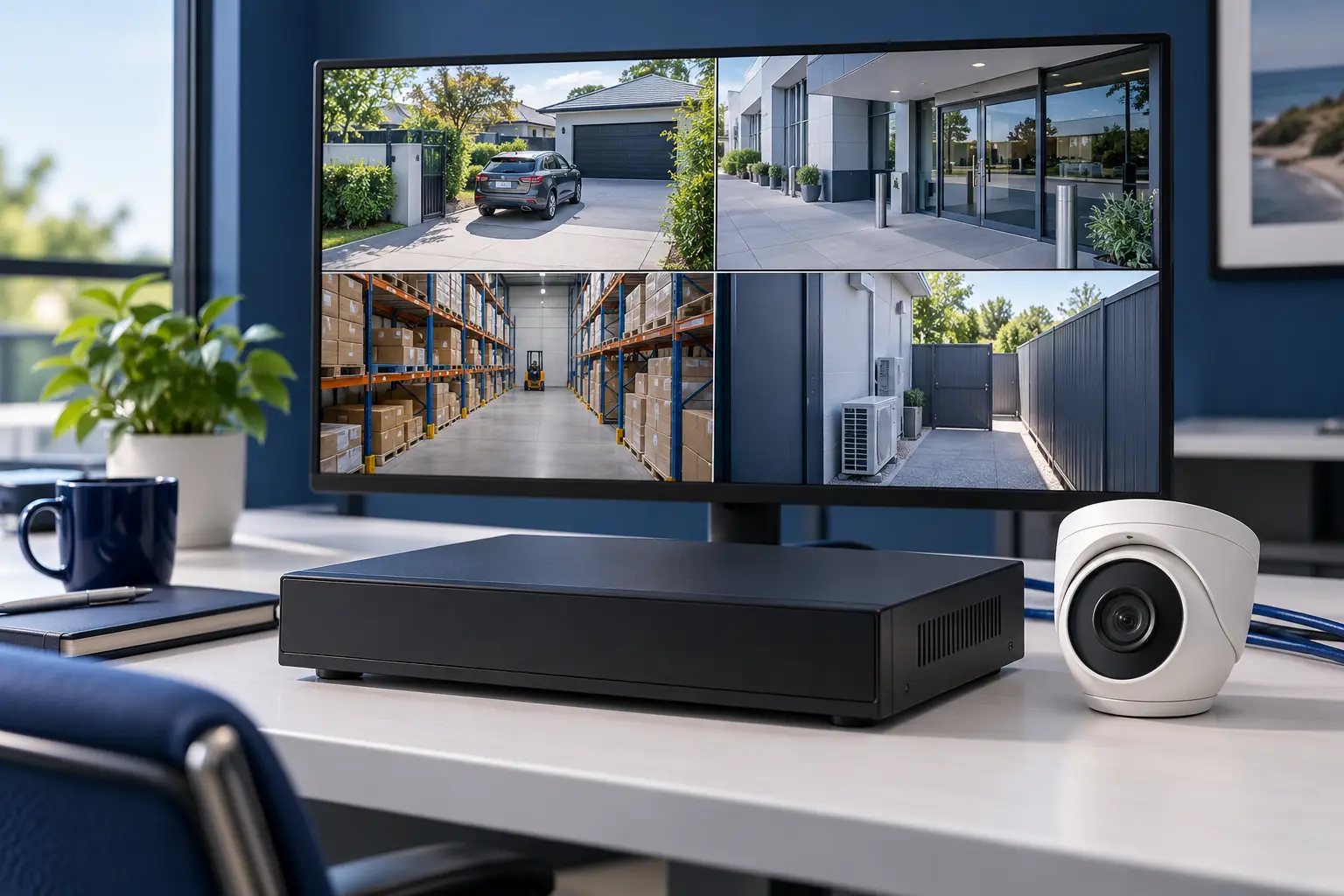
A well-designed camera system serves two purposes: it deters opportunistic offenders during business hours and it provides evidence after an incident. Go through your camera placement and confirm that every entry point, car park and high-value area is covered. Footage should be recorded and stored for at least 28 days, with cameras positioned to capture faces rather than the tops of heads. If your system only supports passive recording, consider upgrading to monitored CCTV monitoring — being alerted to unusual activity in real time gives you the chance to intervene before a situation escalates into a costly incident.
Tighten Key and Access Management
Lost or unreturned keys remain one of the most common causes of break-ins that show no signs of forced entry. Review who currently holds keys or access fobs, make sure the register is up to date, and check whether any keys have been returned by departing staff or contractors. If you regularly issue temporary access to cleaners, tradespeople or delivery drivers, there should be a documented tracking system in place. For businesses with multiple employees and frequent contractors, investing in electronic access control for high-traffic areas gives you far better oversight and the ability to revoke access instantly when someone leaves.
Manage Cash Handling
Cash is still the most frequent theft target for retail and hospitality businesses across NSW. Put a minimum-float policy in place and make it visible at the point of sale. Empty tills to a bolted-down safe at close of business, and bank regularly instead of letting cash accumulate on the premises. The safe itself should be fixed to the floor and not visible from outside the building. If your business takes cash during opening or closing shifts, establish clear procedures for those higher-risk periods. Simple, visible measures — keeping tills light, storing cash off-site overnight, and displaying signage about cash handling — go a long way toward reducing opportunistic theft.
Address After-Hours Risk
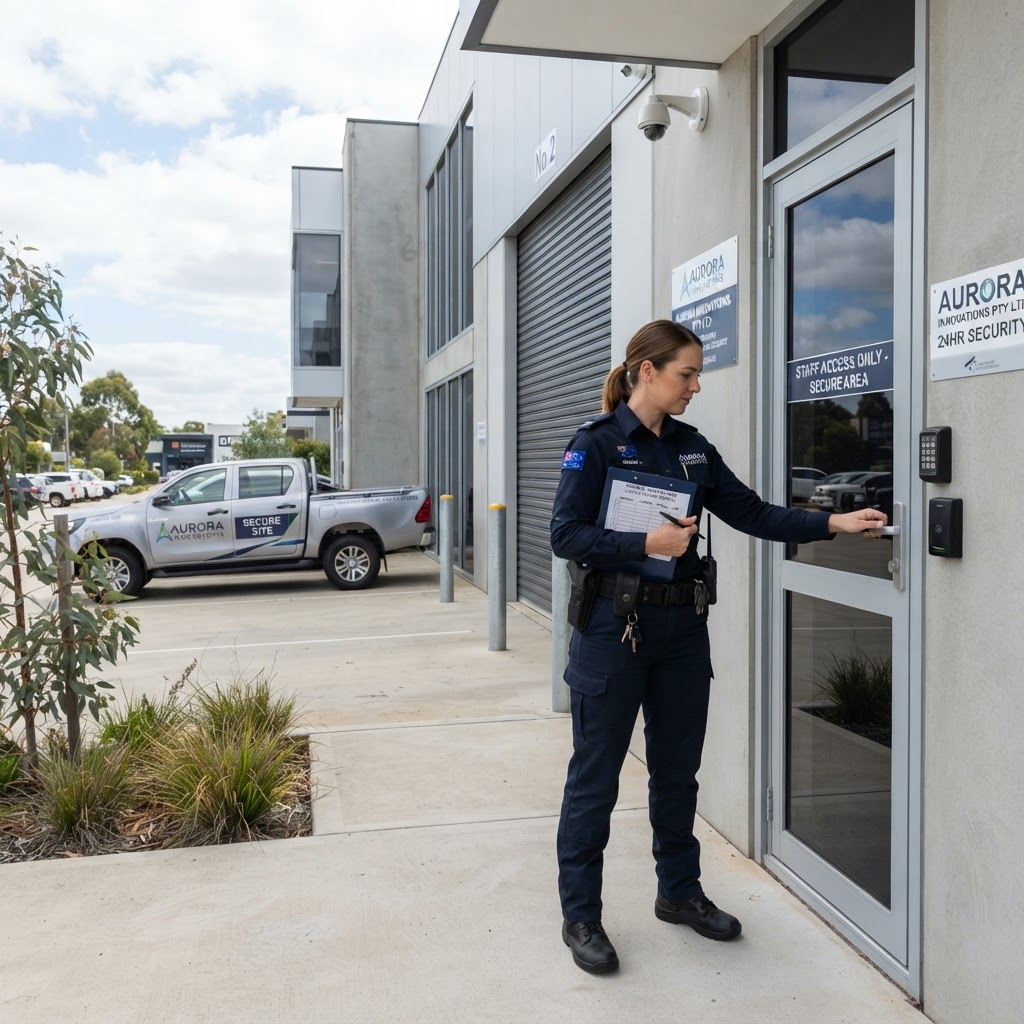
The majority of commercial break-ins happen when the premises is empty overnight, on weekends or during public holidays. Assign a named person to lock up each night, and use a standard checklist that covers doors, windows, alarm, lights and safe. For properties that sit vacant for extended periods — particularly retail strips where foot traffic spikes during school holidays and then drops away — mobile patrol services offer a high-impact, low-cost deterrent. A uniformed officer arriving at unpredictable times makes your site a much harder target, and for sites with alarm systems, a patrol can respond to activations quickly rather than leaving the property unattended until morning.
Train Your Staff
Your team is your eyes and ears during opening hours. A solid staff security protocol should include clear guidance on identifying suspicious behaviour, a simple written or digital incident-reporting process, and refresher briefings at least quarterly. Include procedures for handling aggressive customers, and make sure every team member knows who to contact if they notice something unusual. Well-trained employees are often the difference between an incident prevented and one that is only discovered after the fact.
Book an Independent Risk Assessment
The single most valuable step on this checklist is a professional assessment by a licensed security practitioner. An external eye will spot gaps that internal staff often miss, produce a prioritised action plan matched to your actual risk profile, and may be required by your insurer. For businesses with seasonal demand, remote site locations or high-value stock, an annual risk assessment should be standard practice rather than an optional extra — some insurers even reduce premiums when an assessment is completed and its recommendations implemented.
Putting It Into Practice
Work through this checklist and you will quickly see where your premises stands. If most items are a confident yes, your business is reasonably well protected. If gaps appear, the next step is straightforward — arrange a practical security review with a licensed provider who can walk through your premises with you, identify weaknesses and help you close them before they are exploited.
Frequently Asked Questions
How often should a business security checklist be reviewed?
At minimum, review your commercial security checklist annually. High-risk sites or businesses that have had a recent incident should review quarterly. Seasonal businesses should audit before peak trading periods such as Christmas, school holidays and long weekends.
What is the difference between monitored and passive CCTV?
Passive CCTV records footage but does not alert anyone in real time. Monitored CCTV uses technology and human oversight to detect unusual activity and trigger a response, giving you the chance to intervene before a break-in or incident escalates.
Are mobile patrols effective for commercial premises?
Yes. Mobile patrols are particularly effective for sites that sit vacant overnight or in semi-rural locations. A uniformed officer arriving at varying times creates a visible, unpredictable deterrent that makes the site a harder target.
How long does a security risk assessment take?
A standard commercial risk assessment takes one to two hours on site, depending on the size of the premises. The written report is usually delivered within two to three business days.

Written by
Susan Blenman
SEO Analyst
Susan Blenman has worked in the security industry since 1993, sharing trusted insights and real-world expertise on security systems, technology, and protection strategies.
Stay informed
Get the latest security insights, guides, and company spotlights delivered to your inbox.
Related Articles
Sponsored

Ajax Alarm Systems: Wireless, App-Controlled & Pet-Friendly Security
Smart, Stylish Security for Homes & Small Business Protect what matters with the Ajax wireless alarm ecosystem—fast to install, easy to use, and ready for smartphone control. Choose pre-built kits or build your own with motion, door/window, glass break, sirens, keypads and more.

Protect Your Property After Hours
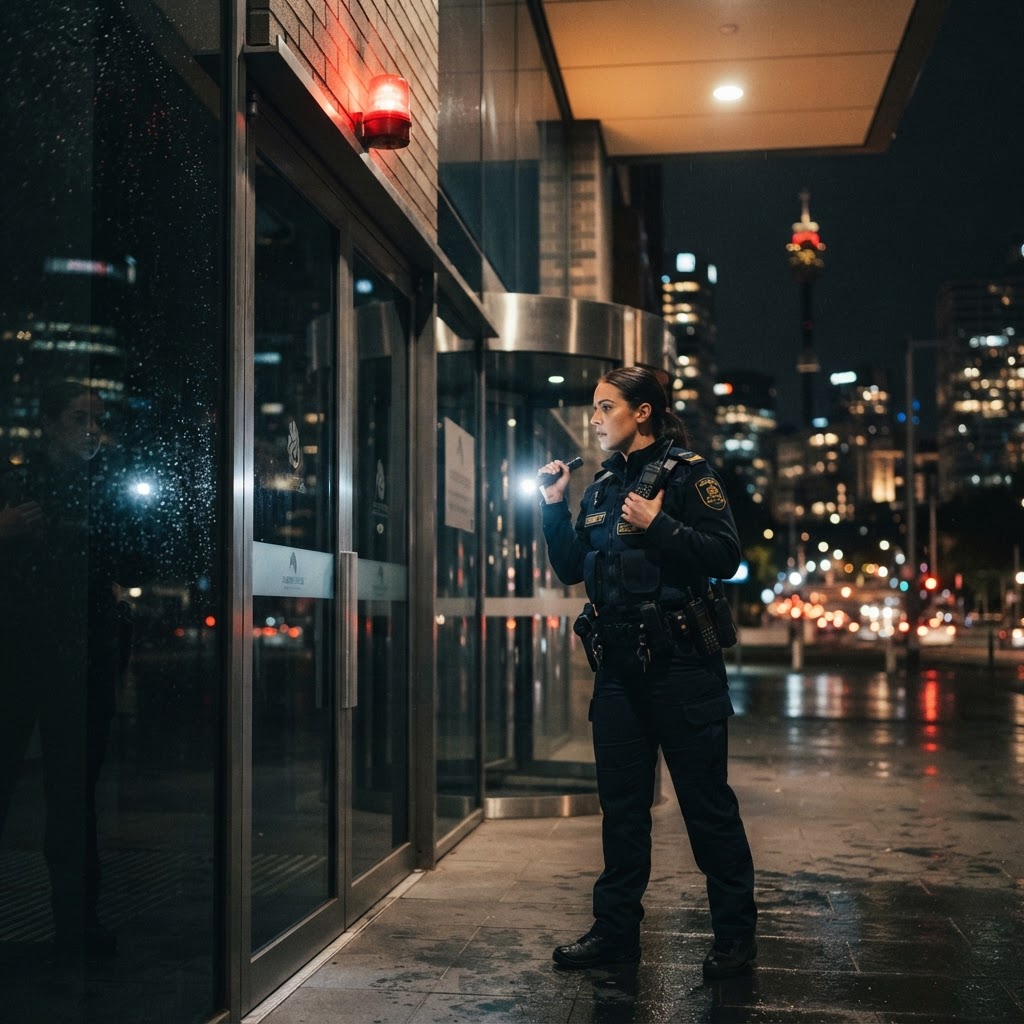
Keep your business, site or facility secure with professional mobile patrols from Partisan Protective Services. Our trained security officers provide visible deterrence, scheduled checks and rapid response to help reduce theft, vandalism and unauthorised access.

Bosch Solution 6000 Security
Ideal for Larger home or Businesses