Hotel and Accommodation Security in NSW: Protecting Guests, Staff and Property
Featured Companies

Davlin Security
Davlin Security provides trusted security guards, mobile patrols and alarm response services for businesses and properties in Campbelltown.
Visit Website- 1. Why Accommodation Is Its Own Security Problem
- 2. The Incidents Operators Actually Deal With
- 3. Guest and room property theft
- 4. Alcohol-fuelled incidents and late arrivals
- 5. Trespassers, car parks and back-of-house
- 6. Interpersonal violence and welfare checks
- 7. Functions, conferences and wedding crowds
- 8. What a Sensible Program Looks Like
- 9. The Hours That Actually Matter
- 10. What the Law Expects in NSW
- 11. What Drives the Cost
- 12. What to Ask a Provider Before You Sign
- 13. The Brief Matters More Than the Badge
Hotels and motels sell safety as much as they sell rooms. Where accommodation risk actually comes from in NSW, what hotel security services should include, and how to brief a provider before something goes wrong.
Every hotel, motel and serviced apartment in NSW sells a version of the same promise: that a guest can sleep safely behind a locked door. When that promise breaks — a room break-in, a confrontation in the car park at 1am, a function that spills into the foyer — the cost is never just the stolen property. It lands in reviews, staff turnover, insurance premiums and, depending on your licensing position, in penalties.
Accommodation security is also a fundamentally different discipline from guarding a warehouse or a construction site. A hotel is a public building by design. Strangers have legitimate keys, staff work alone at odd hours, cash and stock move through back-of-house, and alcohol is usually in the mix. The job is not to lock the property down. It is to keep the place welcoming while quietly controlling the small number of situations that can escalate.
Why Accommodation Is Its Own Security Problem
Three structural features make hotels and motels harder to secure than almost any other commercial site:
- The building is open to the public. Foyers, bars, restaurants, car parks, lifts and corridors are shared space. Anyone can walk in and look like they belong, which is exactly what offenders rely on.
- Everyone is transient. Guests change nightly, contractors come and go, and staff cannot tell a paying guest from someone who followed one in. Familiarity — the thing that keeps most workplaces safe — never builds up.
- Vulnerable hours are built into the roster. Housekeeping starts before dawn on empty corridors. Night audit is often one person behind the desk. Duty managers deal with noise complaints, welfare checks and evictions on their own.
None of this reflects poor management. It is simply the shape of the industry, and it is why accommodation operators lean on procedures, technology and trained presence rather than a locked gate.
The Incidents Operators Actually Deal With
Guest and room property theft
Opportunistic theft is the most common loss, and it rarely involves forced entry. More often it is a door left ajar by housekeeping, a key card never deactivated after checkout, an accessible ground-floor window, or a guest who let someone in. Key control plus documented patrols of corridors and fire stairs close most of that gap.
Alcohol-fuelled incidents and late arrivals
Late check-ins, functions running past midnight and guests returning from a night out create the highest-risk window in any property. Small disagreements turn physical in front of other guests, and a single incident can colour reviews for months.
Trespassers, car parks and back-of-house
Basement car parks, loading docks, bin areas and pool surrounds attract people who are not guests. Vehicles are broken into, stock disappears, and evidence is thin because nobody was watching. Randomised patrols usually outperform cameras here, because a camera records a theft while a patrol prevents one.
Interpersonal violence and welfare checks
Accommodation properties are where domestic situations, overdoses and mental health crises surface, often at 3am and often reported by another guest. Staff need a trained first responder who can attend, de-escalate, document it properly and call police or ambulance without putting a lone receptionist in the middle of it.
Functions, conferences and wedding crowds
Any property with a function room is effectively running a licensed venue several nights a week. Crowd control, entry management and a clear chain of command during egress are separate skills from front-desk presence, and they are best covered by briefed event security officers rather than by stretching the overnight guard.
What a Sensible Program Looks Like
Hotel security programs work best as a mix rather than a single product. In practice they are built from these pieces:
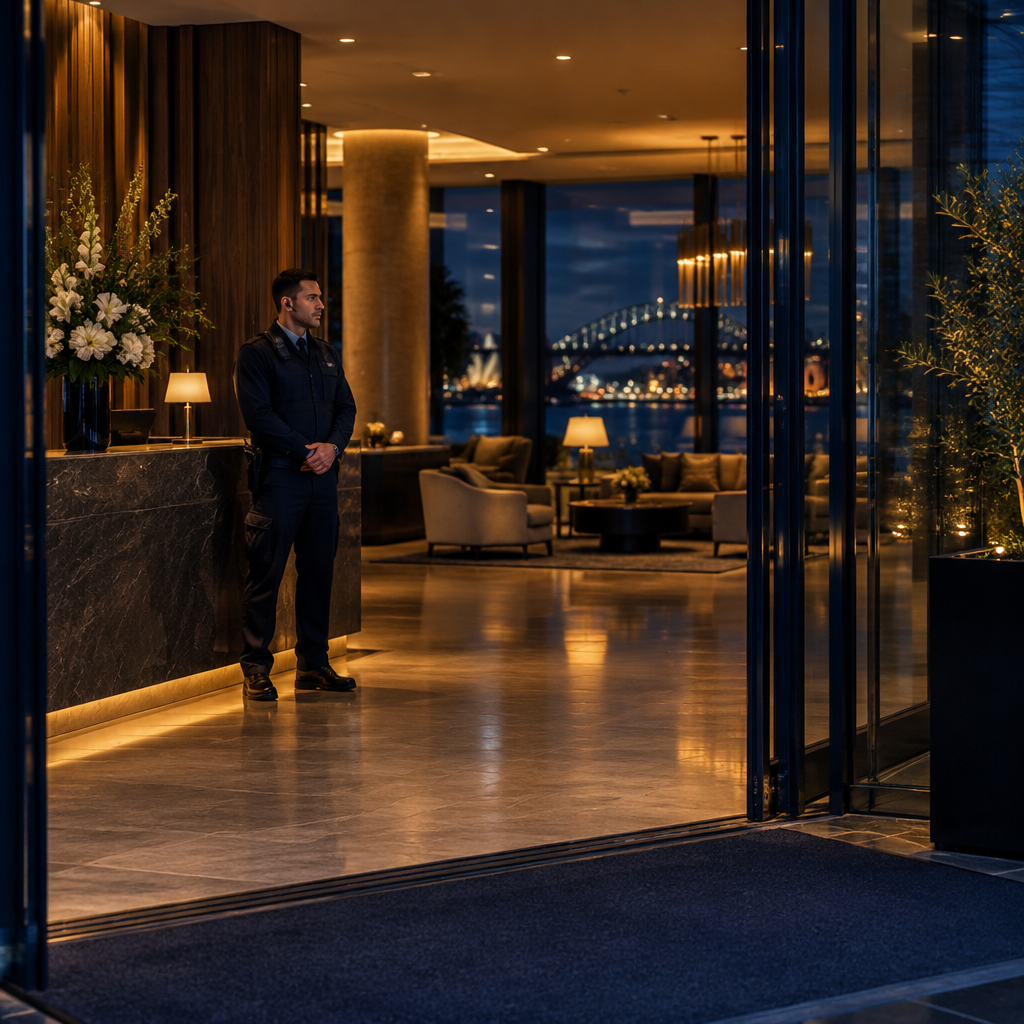
- Overnight static presence. A licensed officer on the desk or on foot through the property from evening to morning: visible enough to deter, calm enough not to alarm guests, trained to document every incident.
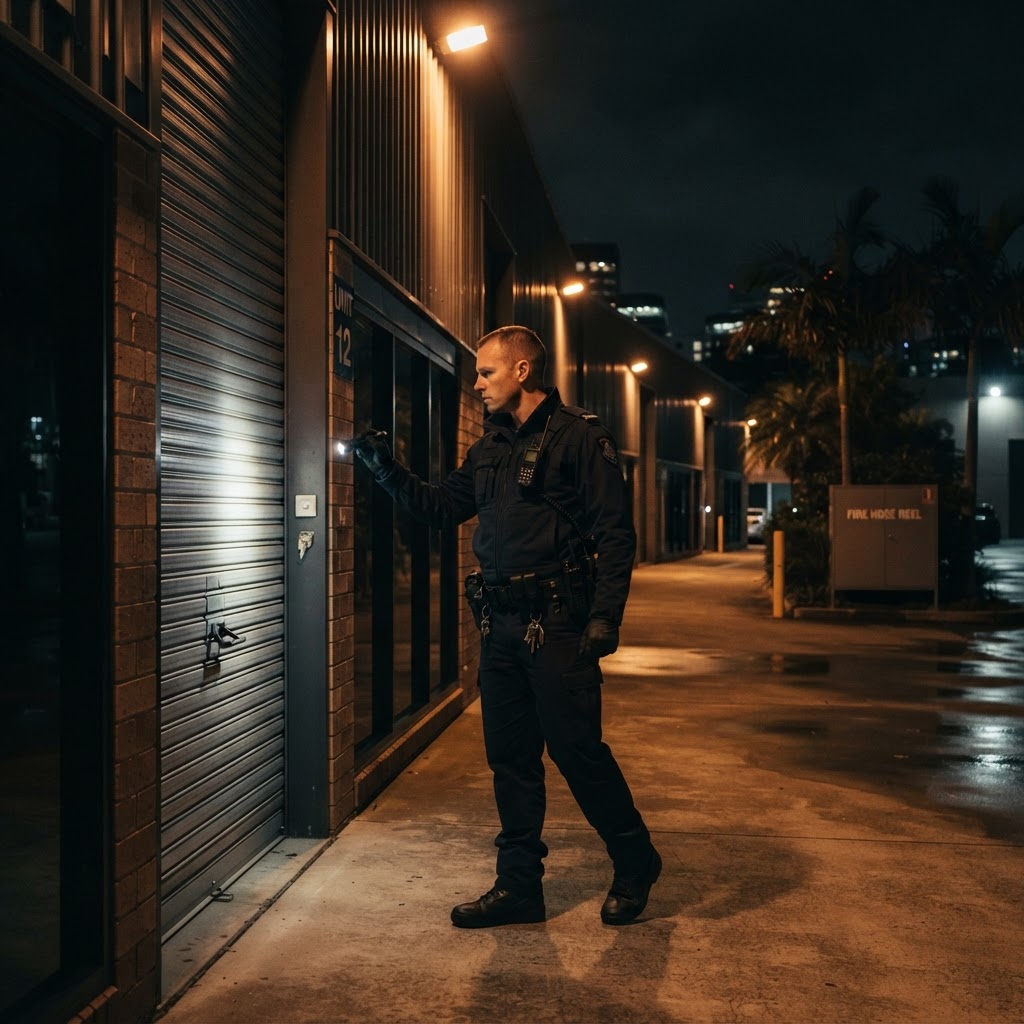
- Mobile patrols. For motels, serviced apartments and multi-site operators, scheduled and randomised patrols checking car parks, entries, pool areas and perimeters. This gives smaller properties a security presence without paying for a full overnight shift.
- Event and function coverage. Crowd controllers for functions, conferences and peak weekends, scaled to expected numbers rather than a fixed roster.
- Alarm monitoring and response. Back-to-base monitoring on back-of-house doors, plant rooms, safes and cash offices, with a documented response so an activation brings someone to the door rather than a siren nobody hears.
- Access control and CCTV review. Not a pitch for more cameras, but a review of where keys, cards and fobs actually go, plus retention settings that stand up if police need footage weeks later.
- Procedures and staff support. Duress processes, incident registers, clear escalation to police or ambulance, and a briefing sheet so contract officers know the property before their first shift.
The Hours That Actually Matter
Security spend is wasted when it is spread evenly across the week. In most accommodation properties, risk clusters into three windows: the late afternoon check-in peak, when strangers fill the foyer and staff are stretched; bar close through to about 2am, the highest chance of an alcohol-related incident in front of the largest audience; and pre-dawn housekeeping and night audit, when corridors are near-empty, staff are alone, and theft is easiest. Briefing a provider around those windows is far more effective than adding hours at random.
What the Law Expects in NSW
- Any provider you engage must hold a current NSW Master Licence, and every officer on site must hold an individual security licence with the correct subclass for the work — guard, crowd controller and so on. Ask for the numbers and check them.
- If the property has a bar or hosts functions, security arrangements sit alongside your liquor licensing obligations, including how incidents are recorded and reported.
- CCTV and incident records are personal information. Keep footage only as long as you genuinely need it, restrict who can view it, and store it where it can be produced intact if police request it.
What Drives the Cost
Pricing comes down to presence hours, skill mix and coverage peaks, not a fixed rate per property. A 40-room motel wanting randomised night patrols and alarm response is a very different cost to a 180-room hotel running an overnight officer, weekend crowd control and event coverage. The budget conversation gets much easier once a risk assessment has ranked the windows and the answer is "guards here, patrols there, monitoring on these doors" rather than "guards everywhere". Understanding what security guard costs actually reflect helps frame that discussion in plain numbers.
What to Ask a Provider Before You Sign
- Which master licence and individual licences apply to my site, and can I see them?
- Who briefs the officer, and what do they know about my property before their first shift?
- What does an incident report contain, and how quickly do I receive it?
- What happens when an alarm activates, and who physically attends?
- How do you handle a guest complaint escalating at 1am without alarming the rest of the house?
The Brief Matters More Than the Badge
Most accommodation security problems are not solved by adding a guard at the front door. They are solved by knowing which hours, which spaces and which situations actually generate incidents at your property, then building coverage around that evidence. That is a walk-through conversation, not a sales pitch — and it is worth having before the next peak season, not after it. If you would like that looked at properly, request an obligation-free assessment and have the car parks, back-of-house and function space reviewed against how the property actually runs.

Written by
Susan Blenman
SEO Analyst
Susan Blenman has worked in the security industry since 1993, sharing trusted insights and real-world expertise on security systems, technology, and protection strategies.
Related Articles
Sponsored

Ajax Alarm Systems: Wireless, App-Controlled & Pet-Friendly Security
Smart, Stylish Security for Homes & Small Business Protect what matters with the Ajax wireless alarm ecosystem—fast to install, easy to use, and ready for smartphone control. Choose pre-built kits or build your own with motion, door/window, glass break, sirens, keypads and more.

Protect Your Property After Hours
Keep your business, site or facility secure with professional mobile patrols from Partisan Protective Services. Our trained security officers provide visible deterrence, scheduled checks and rapid response to help reduce theft, vandalism and unauthorised access.

Bosch Solution 6000 Security
Ideal for Larger home or Businesses