Event Security Planning: What Organisers Should Consider Before the Day
Featured Companies

Davlin Security
Davlin Security provides trusted security guards, mobile patrols and alarm response services for businesses and properties in Campbelltown.
Visit Website- 1. 1. Understand Your Event's Risk Profile
- 2. 2. Crowd Size Determines Staffing Levels
- 3. 3. Plan Entry and Exit Points
- 4. 4. Alcohol Service and RSA Considerations
- 5. 5. Emergency Access and Evacuation Planning
- 6. 6. Cash Handling and High-Value Asset Protection
- 7. 7. Communication Channels
- 8. 8. Insurance and Licensing Compliance
- 9. Planning Your Next Event
- 10. Frequently Asked Questions
- 11. How many security guards do I need for my event?
- 12. Do event security guards need NSW SLED licences?
- 13. When should I start planning event security?
- 14. What happens if an incident occurs during my event?
The security decisions you make weeks before your Campbelltown event shape how safe and smooth the day will be. Here's a practical planning guide for organisers.
Event security isn't something you sort out on the morning of the event. Whether you're running a community festival, a corporate function, a Saturday market or a ticketed night-time event, the planning decisions you make weeks before the doors open will shape how safe, smooth and successful the day is.
Across NSW, organisers in Sydney's south-west and beyond work with providers like Davlin Security to plan and deliver security for events of all sizes. Here are the key things every organiser should consider before the day.
1. Understand Your Event's Risk Profile
The first step in event security planning is understanding what could go wrong. Different events have very different risk profiles:
- A daytime community market carries different risks to a late-night music event
- A school fete has different risks to a corporate function at a hotel or conference venue
- A ticketed festival has different risks to a trade show or exhibition
A pre-event risk assessment takes into account crowd size, venue type, time of day, alcohol service, ticketing, cash handling, parking and any recent incidents in the area. The output is a security plan that addresses your event's actual risks — not a generic template.
2. Crowd Size Determines Staffing Levels
Under NSW event security regulations, crowd-to-guard ratios are guided by the size, layout and risk profile of the event. As a general rule:
- Small events (under 200 attendees): 2–3 licensed crowd controllers
- Medium events (200–500 attendees): 4–6 licensed crowd controllers, with a dedicated supervisor
- Large events (500+ attendees): a comprehensive team including entry control, roaming officers and a control point supervisor
Where attendance may fluctuate — community days, markets, family fun days — plan for the upper end of expected attendance, not the lower. It's far easier to scale down than it is to add staff on the day.
3. Plan Entry and Exit Points
The entry point is where most incident risk clusters. Poorly managed entries lead to queue congestion, ticket confusion, alcohol-related behaviour and unauthorised access.
Your event security plan should include:
- A clearly marked entry with bag checks where applicable
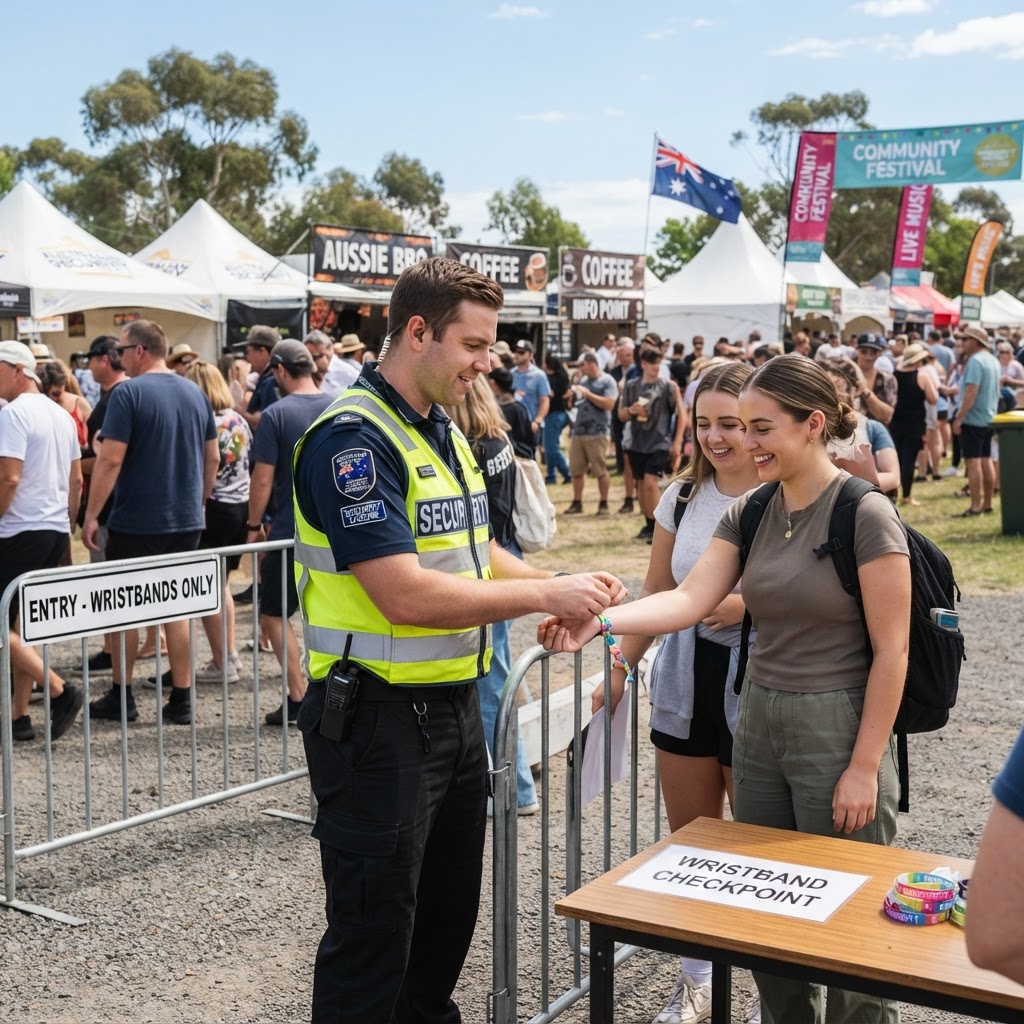
- Ticket scanning and a wristband or stamp system
- A separate exit to prevent bottlenecks
- Clear signage directing attendees to the right lane or gate
4. Alcohol Service and RSA Considerations
If your event serves alcohol, your security plan needs to align with your Responsible Service of Alcohol (RSA) procedures. This means:
- Security officers trained in the venue's RSA policy
- Clear communication between security, bar staff and event management
- Procedures for managing intoxicated or disorderly patrons
- An agreed removal or denial-of-entry process for non-compliant attendees
All licensed event officers should hold a current NSW security licence with a crowd control endorsement. You can confirm any officer's licence through the NSW Police SLED public register before booking your provider.
5. Emergency Access and Evacuation Planning
Event security isn't just about preventing incidents during the event — it's about ensuring safe evacuation if something goes wrong.
Your security plan needs to identify:
- Emergency vehicle access routes for ambulance, fire and police
- Evacuation assembly points
- Fire exit signage and lighting
- Communication procedures between security, event staff and emergency services
For outdoor events, weather-related evacuation — thunderstorms, high winds, extreme heat — also needs to be considered as part of the plan.
6. Cash Handling and High-Value Asset Protection
For events with cash transactions — market stalls, ticketed gate entries, food and beverage vendors — cash handling is a real risk. Opportunistic theft from event staff is more common than organisers expect.
Consider:
- Secure cash collection points
- Regular cash drops to a locked location
- Visible security presence at high-traffic entry and exit points
- After-hours protection for staging, marquees or equipment left on site overnight, such as mobile patrols
7. Communication Channels
Communication failures are a common cause of event security incidents. Decide in advance:
- Will security officers use radios, phones or both?
- Who is the single point of contact for security incidents?
- What's the escalation tree if an incident becomes serious?
- How will security communicate with event organisers and emergency services?
Every professional event team has a designated team leader who coordinates on the ground and is the single point of contact for the organiser.
8. Insurance and Licensing Compliance
Any security provider you engage should hold:
- A current NSW Master Security Licence (Class 2)
- Public liability insurance — a minimum of $10 million is recommended for events
- Workers compensation insurance covering all deployed officers
- SLED-licensed individual officers with appropriate endorsements
Before you sign with a security provider, ask for copies of all of these. Any reputable security company will provide them without question.
Planning Your Next Event
The best time to engage a security provider is 4–6 weeks before your event. That gives the team time to complete a site visit, conduct a risk assessment, recommend staffing levels and positioning, confirm licensing and insurance requirements, and prepare a written security plan you can share with the venue, insurers and local council.
For organisers planning an event in NSW — from Campbelltown and the Macarthur region through to greater Sydney — book a pre-event security consultation to get the planning started early.
Frequently Asked Questions
How many security guards do I need for my event?
It depends on crowd size, venue type, time of day and whether alcohol is served. As a general rule, plan for 1 security officer per 100 attendees for low-risk events, and 1 per 50 for high-risk or licensed events.
Do event security guards need NSW SLED licences?
Yes. Every officer deployed to an event must hold a current NSW security licence with the appropriate endorsement, such as crowd controller. The provider itself must also hold a NSW Master Security Licence.
When should I start planning event security?
Ideally 4–6 weeks before your event. This allows time for a site visit, risk assessment, staffing confirmation and a written security plan. For larger events of 500+ attendees, start 8–12 weeks ahead.
What happens if an incident occurs during my event?
Your security team leader manages the incident, coordinates with event staff and emergency services as needed, and provides a written incident report after the event. Serious incidents may require NSW Police involvement, which your provider should coordinate on your behalf.

Written by
Susan Blenman
SEO Analyst
Susan Blenman has worked in the security industry since 1993, sharing trusted insights and real-world expertise on security systems, technology, and protection strategies.
Stay informed
Get the latest security insights, guides, and company spotlights delivered to your inbox.
Related Articles


Sponsored

Ajax Alarm Systems: Wireless, App-Controlled & Pet-Friendly Security
Smart, Stylish Security for Homes & Small Business Protect what matters with the Ajax wireless alarm ecosystem—fast to install, easy to use, and ready for smartphone control. Choose pre-built kits or build your own with motion, door/window, glass break, sirens, keypads and more.

Protect Your Property After Hours
Keep your business, site or facility secure with professional mobile patrols from Partisan Protective Services. Our trained security officers provide visible deterrence, scheduled checks and rapid response to help reduce theft, vandalism and unauthorised access.

Bosch Solution 6000 Security
Ideal for Larger home or Businesses